Why Simplicity is the Most Powerful System of All
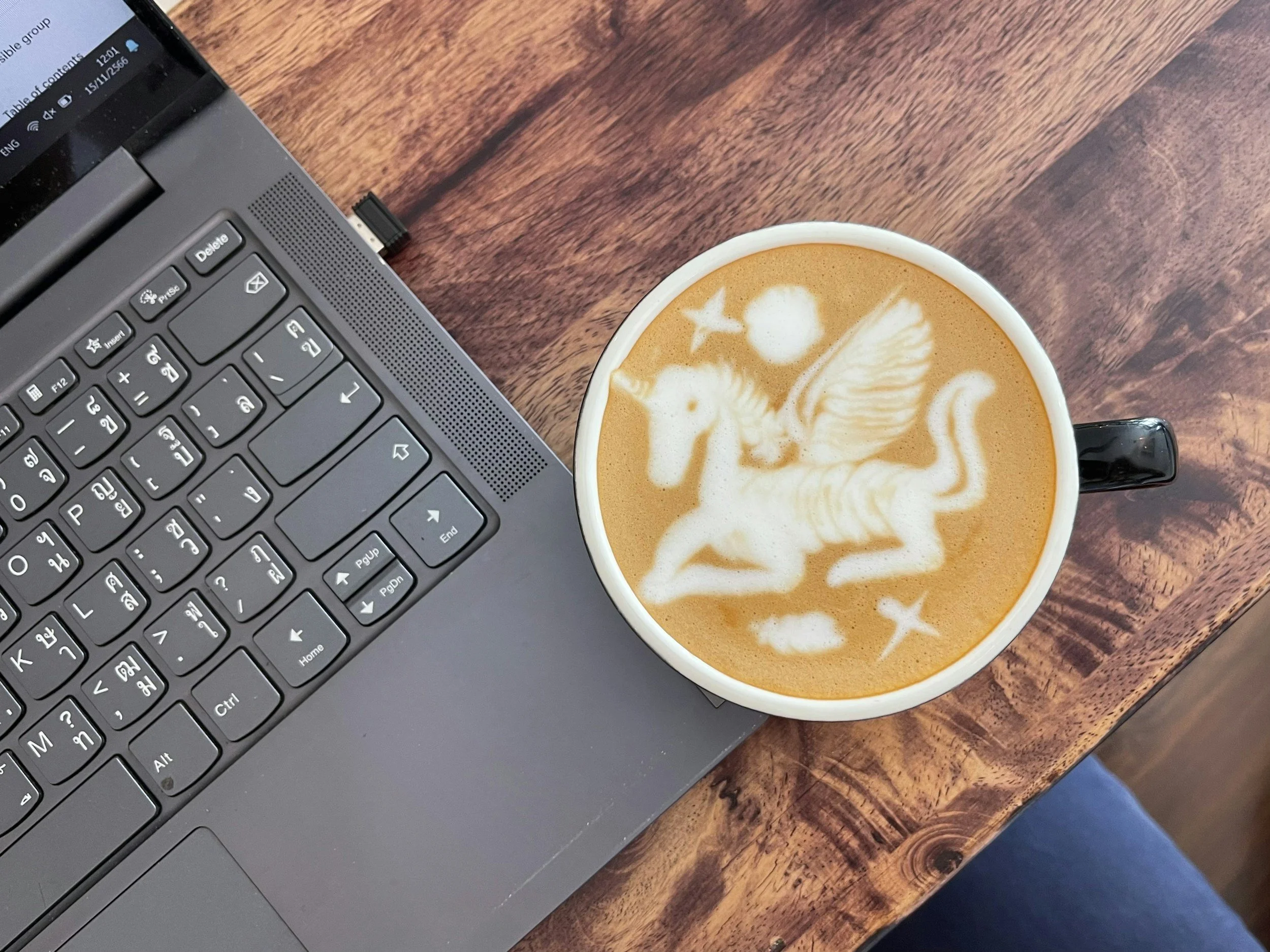
📸✨: Elle inlom (@elliethailand64)
Have you ever noticed how easily your good intentions can turn into clutter?
That’s how it is for me, anyway.
A new tool here, another “must-have” app there — and before long, the setup that was supposed to make things easier has you feeling all tangled up instead.
It happens quietly.
Like a raccoon sneaking into your trash can of good intentions. 🦝
We add layers, trying to lighten the load just a bit, only to lose sight of that peace in the process.
But I’m here to tell ya:
The most powerful systems aren’t the ones that do the most — they’re the ones that feel peaceful.
Simplicity is what gives our work — and our energy — room to breathe.
So, What Is a “System,” Anyway?
Before we go too far, let’s talk about what I even mean by “system.”
I know that word can sound super technical — like something you need a degree in or a whole software subscription for. (Multiple monitors not required, promise.)
But that’s not what I mean here.
A system is simply a way of doing things that helps you get something done without losing your sanity.
It can be as simple as:
the way you plan your week
how you keep track of client notes
how you respond to emails
the steps you take when you start a new project
Sometimes, yes — your system might involve a platform or app, like a calendar or scheduling tool. But the heart of it isn’t the technology itself — it’s the structure that keeps everything flowing.
A good system helps you do what you already do… just with less stress and more clarity. (And fewer “wait, where did I save that?” moments.)
So when I say “simplify your systems,” I don’t mean you have to learn new technology or build automations (unless you want to). I mean looking at how you do things and asking, “Could this be easier?”
That’s the kind of simplicity that changes everything.
The Myth of “More”
Our society celebrates doing more — more productivity, more features, more apps, more options, more… icing! 🧁
And when things feel messy, our first instinct is usually to add something new. A new tool, a better planner, a different strategy — because maybe that one thing will finally make everything click.
But often, the opposite happens.
The more we add, the heavier it all feels.
Suddenly you’re juggling ten apps, three planners, and one rapidly cooling cup of coffee wondering how “simplifying” got so complicated. ☕
We end up managing our systems instead of letting the systems manage our work.
Because what happens is that without any clear structure, everything starts to take on the same level of importance — and when everything is important, nothing feels clear. And when everything is connected to something else, one tiny problem can ripple through the whole setup.
When you take a chance to simplify things, it cuts through that noise.
It gets you back to what matters — and helps your business (and your brain) breathe again.
What Simplicity Actually Looks Like
Simplicity doesn’t mean doing less — it means doing what matters most, with less resistance.
A simple system feels like exhaling. You open your laptop and everything makes sense.
You know where to find what you need. You know what you can do next. You trust the process.
(And you don’t have to mentally prepare before opening your inbox.)
Here’s what that can look like in practice:
One hub, many functions.
Instead of juggling six apps, find one that does 80% of what you need.
A great example for me is Canva. It does so much of what I need: graphic design, social media posts, video editing, audio editing, image editing — I could go on.
Are there other apps that do some of those things better? Hell yes.
But for me, having them all in one place — in a platform I was already using — is way more valuable.
And for the tools I use only occasionally, like audio editing, I don’t have to rack my brain to remember, “Uhhhh, what’s the name of that app again?” … because I’m already there.
(And bonus: fewer random login resets.)
Folders and naming that “future you” will understand.
“Project-A_Final_Final_v2” isn’t it. Simple naming saves future headaches — and probably a few choice words, too.
For me, I use something like this: brand_[sitesection/category]_other_relevant_info.png
This might translate into something like:
upliftedavenue_blog_20251226_download.pdf
upliftedavenue_logo_white.png
Notice the date is in European style — that’s because it sorts better. Anything that requires a date, consider using the YYYYMMDD format because it keeps everything lined up like little digital ducks in a row.
And for folders, I like a simple hierarchy: brand → category → other important things.
This might look like:
uplifted avenue → clients → client name → filename.png
uplifted avenue → website → filename.png
uplifted avenue → logos → filename.png
You get the idea. The goal is that future you opens that folder and says, “Oh wow, thank you, past me,” instead of, “What on earth was I thinking?”
Automations that truly serve you.
Automate just the repetitive tasks that drain your energy — not everything that can possibly be automated.
I built a career helping my corporate clients automate the bejeebers out of everything (that’s the technical term 😉), but when it comes to my own business, I only automate what I don’t want to forget or what makes me go “uuuuuuuugh!”
For example, I automate to check in with Reiki clients the day after our sessions to make sure they’re OK. I’ve super-personalized the messages, but it’s still something I don’t have to remember to send manually.
Check-ins over chaos.
A short periodic review can do more for your clarity than a beautifully elaborate dashboard.
I worked for years as an analyst, so yes — I love a good dashboard.
And yes, I’ve built some for myself.
But dashboards require maintenance. (And caffeine.)
I’m here to tell you: you can accomplish just as much — sometimes more — by methodically checking in on key areas that make sense for you.
If you’re getting the information you need and you’re at peace, you’ve succeeded.
If not, it might be time for a dashboard detox.
Simplicity is about trusting the ease.
It’s choosing clarity over control.
The Real Power Behind Simple Systems
When your systems are simple, something shifts inside you.
You start trusting yourself again.
You’re not wondering if you’re “doing it right.”
You’re not spending hours fixing things that broke because they were too complicated to begin with.
You start noticing a new rhythm — one that flows instead of fights.
And here’s the most beautiful part: simple systems create space.
Space for creativity.
Space for rest.
Space for your intuition to lead again.
When your systems aren’t eating all your attention, you finally have the bandwidth to connect — with your work, your clients, and your own energy.

Tech Tip:
The One-Tool Challenge
For the next week, try this: pick one main platform or tool to run most of your work.
If you normally bounce between five different things — Google Docs, Notion, Trello, your Notes app, and sticky notes — choose just one for a week.
Notice what happens when you stop splitting your focus.
Chances are, your work will feel lighter, your brain will thank you, and you’ll realize your sticky notes were secretly plotting a coup.
How to Begin Simplifying (Without Burning It All Down)
OK. I hear you. You might be thinking,
“But I have my WHOLE BUSINESS in these different places — how can I possibly function without them?!”
Take a breath. You don’t have to scrap everything and start from scratch.
Simplicity grows best through gentle steps — not digital demolition.
If you tear everything down at once, that’ll cause more chaos. We’re going for calm, not crisis.
Try something like this:
Choose one small area that feels messy.
Maybe it’s your content calendar, your file organization, or your email list.
Ask what purpose it actually serves.
Be honest: does it support your work, or has it become extra busywork?
Decide what stays, what goes, and what can be combined.
If it doesn’t make your life easier, it’s not serving you.
Test how it feels.
Do you feel lighter? More focused? More at ease? That feeling is your compass — follow it.
Simplifying isn’t a single project; it’s a mindset shift.
It’s about being intentional with your energy and your tools.
The Spiritual Side of Simplifying
This might sound a little woo-woo (and that’s OK — this is Uplifted Avenue, after all 😉), but simplicity is also energetic.
Every open tab, every notification, every half-finished automation holds a tiny piece of your attention.
When you close those loops — clean your digital desk, unsubscribe from the noise, make your systems intuitive again — you reclaim energy that’s been scattered.
And that energy? You can pour it into creativity, clarity, connection… all the things that really matter in your business.
Simplicity isn’t just a tech decision.
It’s a soul decision.

Empowered Next Step:
Your Simplicity Audit
Take 10 quiet minutes this week and do a “simplicity audit.”
Ask yourself:
Which tools, routines, or systems feel heavy or confusing?
Which ones make me feel supported and calm?
Where am I duplicating effort — or overcomplicating something that could be easier?
Then, pick one thing to simplify — just one.
You’ll be amazed at how much clarity comes from that single decision
(And if you end up celebrating by closing ten browser tabs? That totally counts.)
The Heart of It All
Simplicity isn’t about stripping things away; it’s about revealing what actually works.
When you build systems that fit how you naturally work — instead of forcing yourself into someone else’s model — you move from frustration to flow.
Your most powerful system will never be the flashiest or most expensive.
It will be the one that supports you quietly, consistently, and with ease.
My wish for you (and all my clients) is that your systems be simple, your mind be clear, and your energy be focused on what matters most.
Frequently Asked Questions About Simplifying Systems
Q: What does “simplicity” really mean in a business system?
A: Simplicity means building systems that are easy to use, easy to maintain, and easy to trust. It’s about creating flow, not friction — and freeing your mental space for the work that truly lights you up.
Q: How can I simplify my tech without losing important features?
A: Start small. Combine overlapping tools, remove what no longer serves you, and focus on what genuinely supports your goals. Most people find they use 20% of their tools 80% of the time — so make that 20% shine.
Q: Why are simple systems more sustainable?
A: Simple systems require less maintenance, reduce decision fatigue, and align more naturally with your daily rhythms. They grow with you instead of draining you.
Q: What’s the first step if I feel overwhelmed by my current setup?
A: Pick one small, low-stress area to tidy up. Don’t start with the hardest thing. Each small win builds momentum and reminds you how good it feels to breathe again.
Final Thoughts
If you made it this far without panic-uninstalling half your apps, you’re doing great. 😉
Remember, this isn’t about perfection — it’s about peace.
Simplicity isn’t just a design choice — it’s a declaration.
It says, I trust myself to do meaningful work without needing to prove how busy I am.
Every time you choose simplicity, you make space for peace, creativity, and genuine connection — the things that truly move your business (and your spirit) forward.
Still Have Questions?
If you have any questions I didn’t cover here, or if you’re looking for advice specific to your business, feel free to reach out. I’d love to help you grow your business in a way that feels aligned and sustainable!