Planning Next Year’s Workflow in a Way That Actually Feels Good
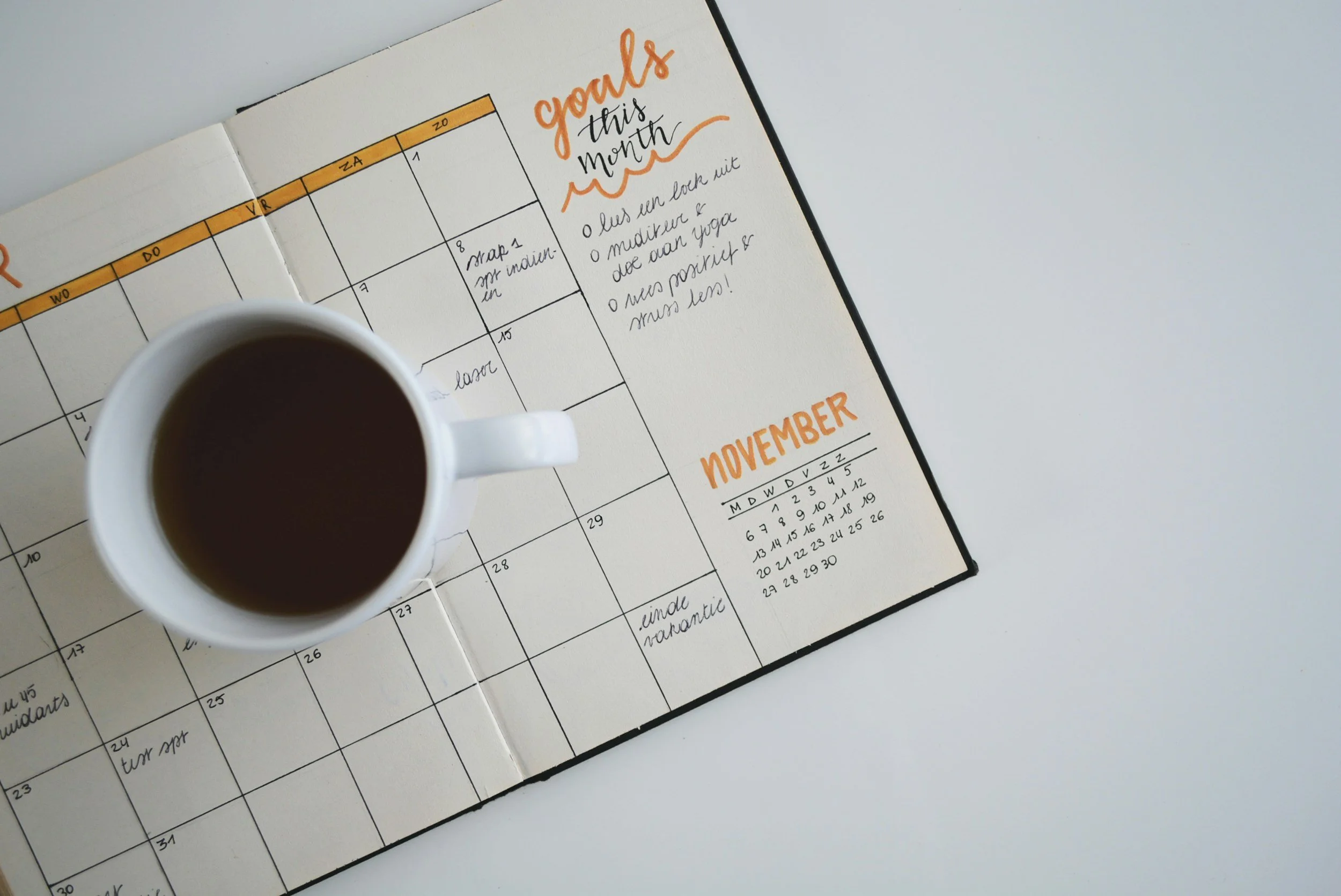
📸✨: Estée Janssens (@esteejanssens)
You ever sit down to plan a new year and suddenly feel like you’re being chased by a pack of color-coded planners?
Or find yourself staring at someone’s perfect “Q1 workflow strategy” on Pinterest, thinking,
“…Yeah absolutely not.”
You are not alone.
A lot of heart-centered entrepreneurs approach planning the way some people approach the gym in January:
with good intentions, a Pinterest board full of “That Girl” routines, and approximately zero desire to actually do any of it.
So let me share a little secret with you that might help…
Planning your workflow for next year doesn’t need to feel like discipline, punishment, or productivity cosplay.
It can feel grounding. Nourishing. Gentle.
Even… dare I say… enjoyable. 🙀
If you’ve ever wished there were a way to plan your business around your actual energy instead of who you think you “should” be, this one’s for you.
Let’s walk through how to create a workflow for next year that feels aligned, sustainable, and — best of all — doable, even on those days when your brain is basically a sleepy raccoon.
Before You Plan: Ask This First
Most people start planning by asking:
→ “What do I want to accomplish next year?”
But we heart-centered entrepreneurs need a different first question:
→ “How do I want next year to feel?”
Because feeling determines function.
And if you build a workflow that feels like sandpaper, you’re not going to stick with it.
(Ask me about the time I tried a rigid “5 a.m. Miracle Morning” for two whole days. Two. Days.)
So pause, and ask yourself:
Do I want my year to feel spacious or structured?
Do I want steady growth or seasonal bursts of creativity?
Do I want more white space on my calendar or more connection?
Do I want my days to feel soft and grounded or dynamic and energizing?
Those answers tell you more about your workflow needs than any productivity guru ever will.
When you pick the feeling first, the structure you choose has something to anchor into.
Step 1: Reflect on What Actually Worked This Year
This step is where so many entrepreneurs skip ahead because they’re excited for the “fresh start” energy.
But if you don’t look at what worked (and what absolutely flopped), you’ll end up rebuilding the same patterns you’re trying to escape.
So grab a journal and ask:
When did work feel easy?
What tasks supported my energy instead of draining it?
Which offers or routines lit me up?
Where did I consistently avoid something — and why?
This isn’t about judgment.
It’s about data… the compassionate kind.
You can even write two simple lists:
“More of this, please.”
“Never doing this again unless the universe personally demands it.”
This helps you plan a workflow that matches reality instead of fantasy.
Step 2: Choose Themes Instead of Goals
Goals are fine.
We love goals (well, some of us 😅).
But themes are friendlier.
Themes remove the pressure of “I must hit XYZ by March 14th or else I’m a total failure,” and instead guide your decision-making all year.
For example:
“Ease over urgency.”
“Depth instead of more.”
“Visibility with softness.”
“Aligned expansion.”
“One thing at a time.”
“Energy-led creativity.”
Once you choose a theme (or two), planning becomes less about what you should do and more about what supports the theme.
Themes = gentle structure.
Goals = pressure.
Choose wisely.
Step 3: Map Your Seasons, Not Your Schedule
One of the biggest lies traditional business planning tells you is that your energy is consistent year-round.
It’s not.
Mine isn’t.
Yours isn’t.
Literally no one’s is.
Instead, try mapping out your natural seasons:
When do you usually feel more creative?
When do you tend to rest or retreat inward?
When do you naturally go into “builder” mode?
When do you hit that “burn it all down” energy and need more softness?
If your creativity peaks in spring, plan content creation then.
If you usually slow down in winter, don’t schedule your biggest launch for January.
If summer brings brain fog, don’t put your highest-focus projects there.
Your energy already has a pattern — your job is to honor it.
Step 4: Create Gentle Containers, Not Rigid Systems
This is where workflows usually die.
People try to build airtight systems because they think it will make them more disciplined.
But airtight = no airflow.
No airflow = no creativity.
No creativity = existential dread and scrolling TikTok at 2 p.m. wondering where it all went wrong.
Instead, build containers — soft, flexible boundaries that guide your energy while still giving you room to breathe.
Examples:
“Batch content when I feel inspired, not on a specific day.”
“Two client days per week, three flexible days.”
“One creative morning every Friday.”
“Check metrics once a month, not daily.”
“A weekly AMA hour — but at any time that feels good.”
Containers give you direction without suffocation.
Step 5: Build In Rest On Purpose (Not as a Reward)
This one’s big.
And it’s one I had to learn the hard way.
Most entrepreneurs accidentally treat rest like dessert.
“You can have it when you earn it.”
Except… rest is fuel.
Not a treat.
Plan it in now:
Weeks off
Days off
Rest hours
Empty afternoons
Launch recovery time
Social detox days
If you wait to rest until you “have time,” you will literally never have time.
Rest isn’t the opposite of productivity.
Rest increases productivity.
Step 6: Define Your “Bare Minimum Workflow”
This is one of my favorite tools because it prevents burnout and guilt.
Ask yourself:
→ “If I had the lowest-energy month of my life, what are the absolute essential tasks I could still do and keep my business alive?”
That is your Bare Minimum Workflow.
Things like:
Answering clients
Delivering services
Weekly visibility (one email, one post)
Sending invoices
One CEO check-in
Everything else?
Optional.
When you define your bare minimum, you stop forcing yourself into unrealistic expectations.
And ironically — you get more done.
Step 7: Add Pleasure Into Your Workflow
And here’s a part I found interesting as I began to do these thing:
Your workflow will last longer when it includes things that feel good.
Things like:
Creating in your coziest space
Making tea or lighting a candle before work
Using tools that feel beautiful
Doing admin work at your favorite café
Wearing comfy socks while doing finances (this helps, I swear)
Pleasure doesn’t distract from discipline.
Pleasure supports discipline.
It regulates your nervous system and makes work feel safer, softer, and more doable.

Tech Tip:
Workflow Dashboard
Create a “Workflow Dashboard” wherever you track your tasks: Asana, Trello, Google Sheets, etc.
Create three columns:
• Energy High
• Energy Medium
• Energy Low
Then list your tasks under each by simply matching the task to the energy — not the clock.
You can use this to track your tasks daily, weekly, or whenever it feels appropriate.
This alone can change your entire way of working.
Why This Matters (Energetically Speaking)
Your workflow isn’t just a strategy — it’s an energetic container.
A nourishing workflow makes your nervous system go, “Ahh, yes.”
A chaotic workflow makes it go, “Absolutely not.”
When your systems support your energy:
You stop pushing from force.
You stop fighting yourself.
You stop overriding your intuition.
You stop burning out.
Planning your workflow this way isn’t “lazy.”
It’s efficient.
It’s sustainable.
It’s nervous-system aligned.
And — maybe most important — it lets your work feel like an expression of you instead of an obligation you inherited from someone else’s planner.

Empowered Next Step:
20% Easier
Pick one part of your workflow that always feels clunky.
Just one.
Ask:
“What would make this feel 20% easier?”
Then make that one adjustment.
Momentum starts with one small shift — not a full overhaul.
The Heart of It All
You don’t need a strict timeline or a vision board that looks like a motivational poster.
You don’t need a productivity overhaul.
You don’t need to become “New Year You.”
You just need a workflow that matches the truth of who you are right now.
One that supports your seasons, honors your sensitivity, respects your energy, and leaves room for intuition, creativity, and rest.
When you build a workflow that feels good, it becomes a rhythm — not a fight.
And when your workflow feels like a rhythm?
You start to dance with it!
Your business becomes easier, your mind becomes clearer, and your energy becomes so much lighter.
Frequently Asked Questions About Planning Next Year’s Workflow
Q: What if I have no idea what my energy cycles even are?
A: Start tracking for two weeks (or even better, for a month or more). Nothing fancy — just jot down when you feel focused, tired, creative, or foggy. Patterns will absolutely show up.
Q: What if I plan all this now but change next March?
A: Perfect. Change with it. Your workflow is a living system, not a contract. Awareness of the change is key.
Q: What if I have clients and can’t just “follow my energy”?
A: That’s where containers help. You don’t have to be free-floating — you just honor your energy within your structure.
Q: Should I still set goals?
A: Yes — but make them compassionate, flexible, and energy-aware. Not the “break your own spirit” kind.
Q: What if I’m really bad at sticking to plans?
A: Then build plans that are stick-withable. The problem is never you — it’s the wrong system for your wiring. Try loosening the reins until there is enough structure to be supportive but enough flexibility to give with your life and energy. Think scaffolding, not concrete.
Final Thoughts
Planning next year doesn’t have to feel like pressure.
It can feel like alignment.
Like grounding.
Like choosing yourself.
Build a workflow that honors your body, your energy, your seasons, and your humanity.
The more your systems feel good, the more you’ll stick with them — and the more you’ll grow in ways that feel stable, gentle, and genuinely aligned.
Still Have Questions?
If you have any questions I didn’t cover here, or if you’re looking for advice specific to your business, feel free to reach out. I’d love to help you grow your business in a way that feels aligned and sustainable!